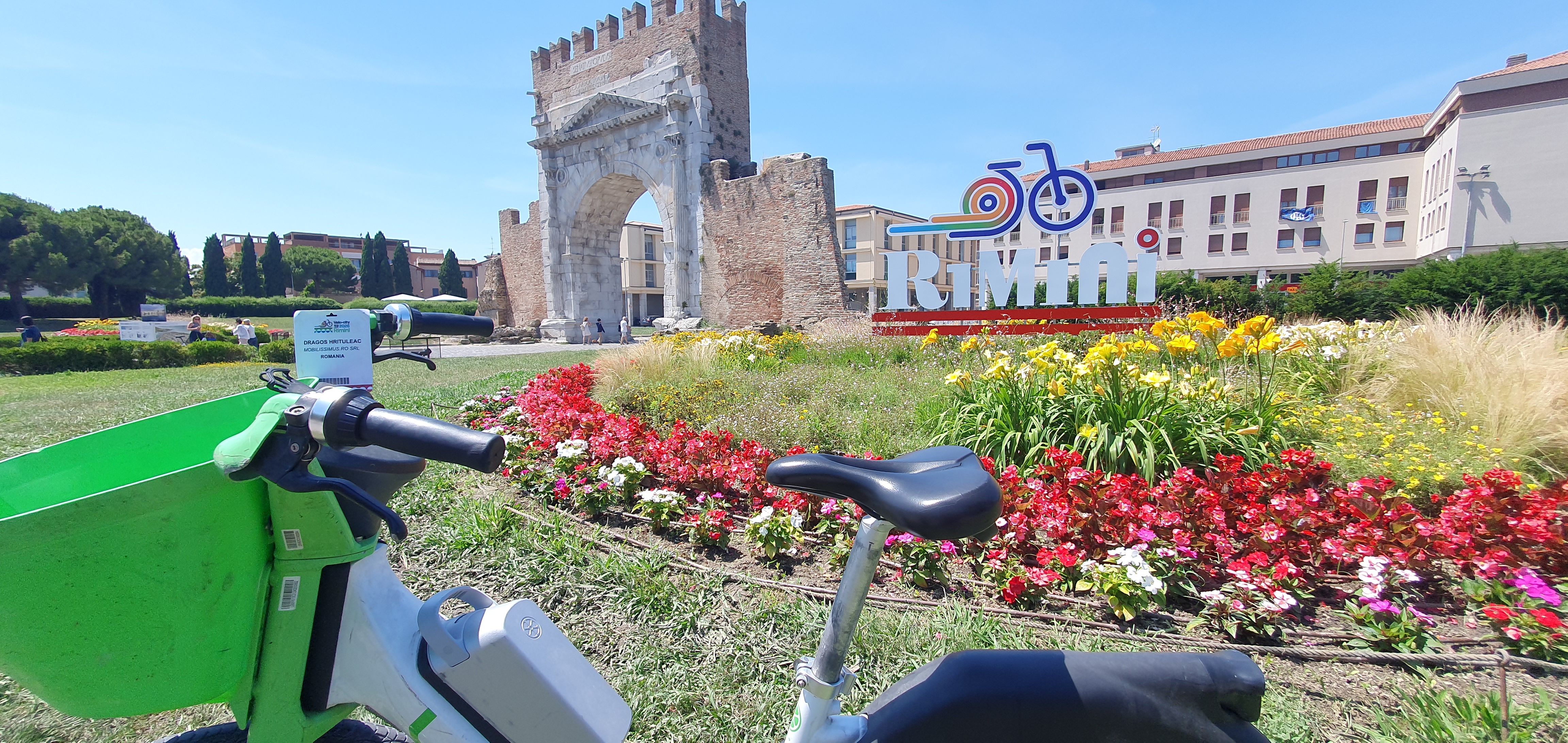
What happens when cycling, urban design, and real implementation come together in one city? You get Rimini — host of Velo-city 2026, the world’s leading cycling summit, which brought together over 1,500 delegates from more than 60 countries from 16 to 19 June 2026. Advocates, city leaders, policymakers, researchers, and industry voices gathered at the Palacongressi in Rimini for four days of sessions, technical tours, exhibitions, and the iconic Bike Parade through the city streets.
Mobilissimus was proud to be represented at the event by Dragoș Hrițuleac, joining a global community of mobility professionals committed to pushing cycling further into the mainstream.


Back to Italy
The European Cyclists’ Federation (ECF) announced Rimini as the 2026 host city back in January 2024 — a choice that resonated far beyond Italy. Velo-city had not been hosted in Italy since 1991, when Milan held the edition, and Rimini’s winning bid signalled a broader European recognition that this mid-sized Adriatic coastal city had undergone a remarkable transformation.
Once dominated by car traffic and mass seaside tourism, Rimini has spent the past decade remaking itself as a liveable, cycling-friendly city. Its flagship project is the Parco del Mare — a 15 km linear urban park along the seafront where grey car-dominated infrastructure was replaced with green areas, cycle paths, pedestrian promenades, and open-air sport facilities.

The Theme: Delivering the Urban Dream
The 2026 edition’s central theme — “Delivering the Urban Dream” — was both a call to action and a challenge to the entire mobility community. It recognised that while the vision for people-friendly, climate-resilient cities is widely shared, the hard work lies in implementation: securing political leadership, engaging residents and businesses, building long-term governance frameworks, and finding the funding to make it stick.
Key Insights from Rimini
Several strong messages emerged across the four conference days, reinforcing trends that practitioners across Europe and beyond are already navigating:
Cycling is core infrastructure, not a niche option
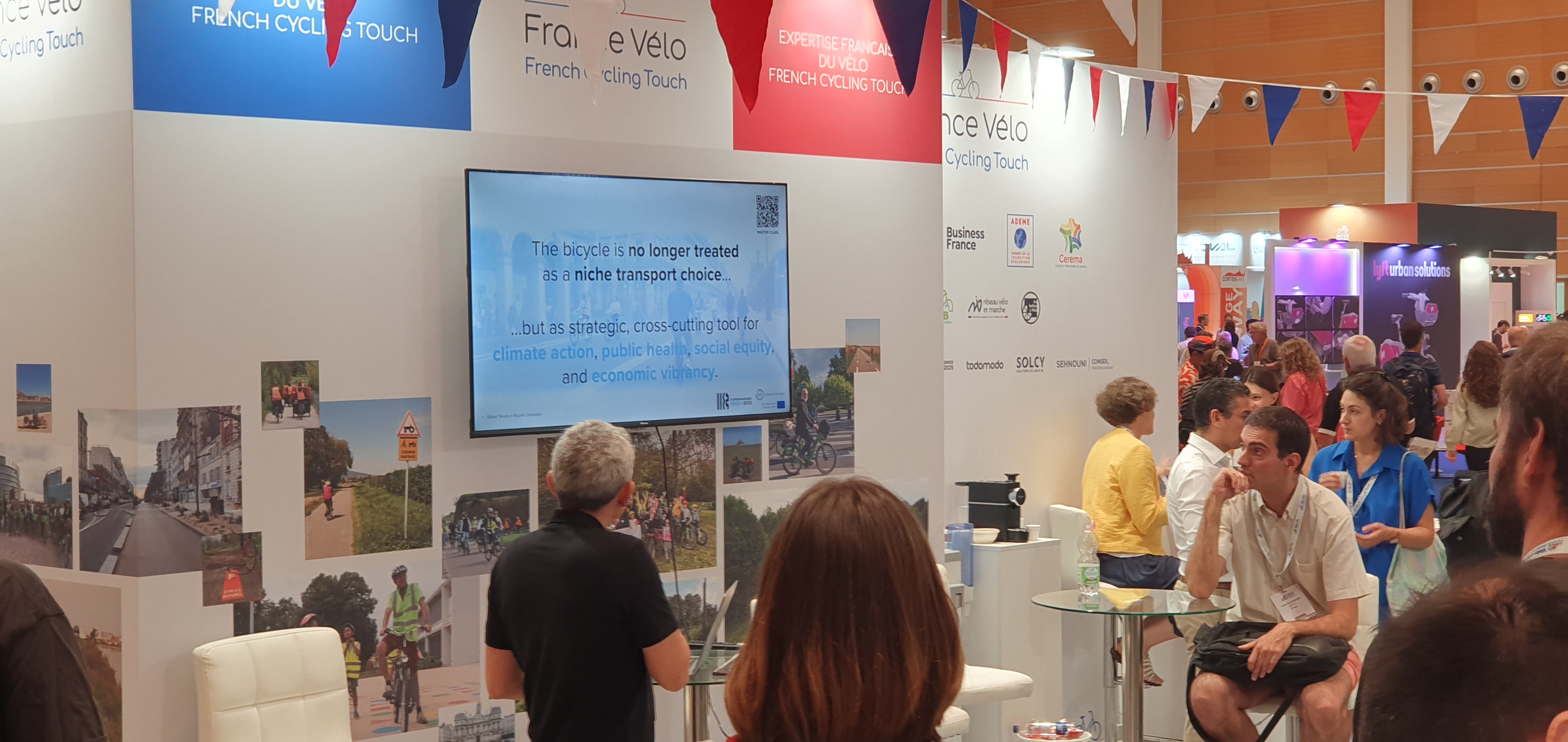
Multiple sessions and post-event reflections converged on a shared conclusion: cycling is no longer positioned as an alternative mode — it is recognised as fundamental transport infrastructure. Analyses presented at Velo-city demonstrated a consistently strong relationship between the availability of cycling infrastructure and its actual uptake, reinforcing the case for strategic, long-term investment. The implication is clear: half-measures produce half-results.
Data is not just for planning — it’s for storytelling
A prominent thread across sessions was the dual role of data. Beyond informing infrastructure decisions, longitudinal monitoring data — counting cyclists, tracking route use, measuring modal shift over time — is indispensable for building compelling public communication. Sessions such as “Cycling Counts: Establishing a baseline and harmonising data collection across Europe” and contributions from data platform providers illustrated how high-quality monitoring turns planning evidence into public narratives that justify continued investment and shape political support.
Language and framing shape public acceptance
One of the more distinctive features of the Rimini edition was its attention to communication and discourse. Sessions like “Watch your language — A live discourse analysis battle about the words you use every day!” and the closing plenary “Good Vibes: Cultivating kindness to counter bikelash” highlighted how media framing and the words professionals use influence whether cycling measures earn acceptance or resistance. The point was not just about PR — it was about designing participation processes and communication strategies that genuinely bring communities on board, rather than creating backlash.
Multimodality: cycling cannot succeed in isolation
For cycling to serve as a genuine alternative to the car, it must function as part of a wider transport system. A UITP-hosted session explored how to plan, manage, and fund integrated mobility across urban-rural geographies, while other panels addressed bike-rail integration, shared mobility interoperability, and the specific challenges of smaller and medium-sized cities where on-demand services may play a larger role. The consensus: modal integration is not a technical afterthought but a strategic design choice that determines whether a cycling network reaches its full potential.
Conference Highlights: Events and Moments
Beyond the programme itself, several moments defined the 2026 edition. The Bike Parade on Wednesday, 17 June, brought hundreds of cyclists through Rimini’s historic centre and along the seafront — open to all, not just conference delegates — making the summit’s message visible in the city’s public space.
The conference’s closing ceremony on Friday, 19 June, marked the handover to the next host: Ehime Prefecture, Japan — specifically Matsuyama, the capital of Japan’s most cycling-friendly region. Velo-city 2027 will be the first edition ever held in Asia, taking place from 25–28 May 2027, and signals the truly global reach cycling advocacy has now achieved.


Why This Matters for Mobilissimus
The themes of Velo-city 2026 are not abstract — they map directly onto the work Mobilissimus does every day across Hungary and Romania. Our portfolio is built around exactly the challenges the Rimini sessions addressed: integrating cycling into county-level and urban mobility plans (SUMP), connecting active mobility to public transport networks, supporting local authorities with stakeholder processes and data-driven arguments, and communicating sustainable mobility in ways that build rather than erode public support.
The message from Rimini — that successful cycling promotion requires a systemic approach combining infrastructure, data, communication, and governance — is one we recognise from our own project experience. Whether developing mobility strategies for Timiș County, supporting CIVINET Romania’s advocacy work, or building active mobility components into cross-border Interreg projects, the same fundamentals apply: cycling works when it is planned as part of an integrated system, championed by local political leadership, and backed by evidence that communities can understand and trust.
From Rimini, Mobilissimus returns with renewed energy and fresh inspiration. The urban dream is not a distant aspiration — it is already unfolding, step by step, ride by ride, city by city.