Mobilissimus, as a leading mobility planning and consultancy company focusing on Central and Eastern Europe, is proud to announce the successful completion of our comprehensive technical work as part of the feasibility study for the ambitious "Cu bicicleta prin vest – traseu cicloturistic" project (By bike in the West – cycling touring route).
This key project is part of Romania’s National Recovery and Resilience Plan, aiming to implement over 3,000 km of national cycling routes. Our team, including two EuroVelo route inspectors and active mobility, provided specialised technical assistance to the main contractor, and implicitly to the counties’ representatives. The proposal covered an expansive network estimated at 1,856 km across the counties of Timiș, Arad, Caraș-Severin, and Hunedoara.
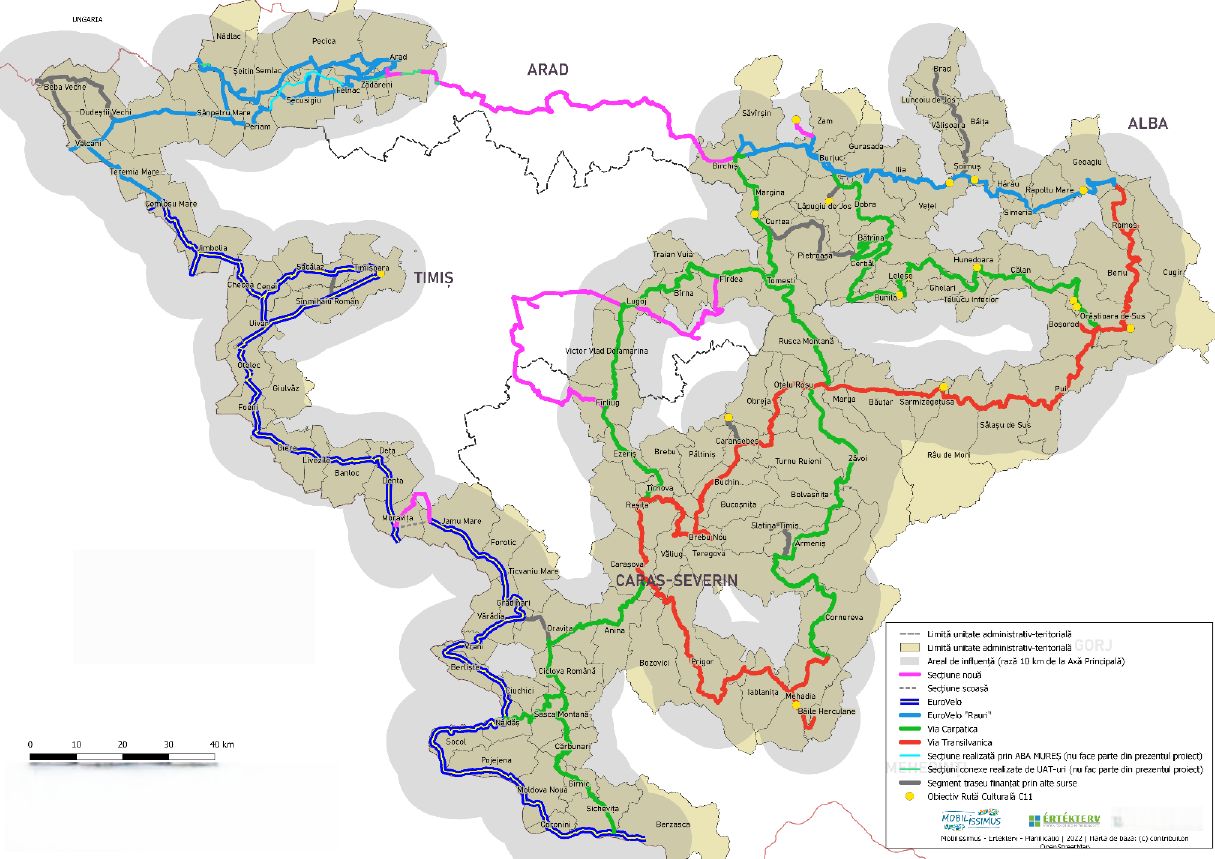
Project area extent (source: Mobilissimus & Értékterv)
Elevating infrastructure to European standards
A core focus of our work was developing generic proposals for improvement for each daily section to facilitate decision-making during the planning process. The sections were defined to ensure an adequate distance to be covered by cyclists of all abilities, taking into account the resupply points, gradients and placement of attractions on any given segment. We detailed foundational planning principles and provided extensive recommendations on infrastructure implementation, including the selection of appropriate facility types based on location and traffic character, reflecting both national guidance and European best practice.
A significant challenge identified through baseline assessment was the high exposure to motorised traffic and the widespread use of unsuitable surfaces on existing routes, which often failed to meet the quality standards required by the European Cyclists’ Federation (ECF). Our proposed infrastructure development focuses on converting segments away from high-traffic and very high-traffic roads—including approximately 115 km of major roads converted to segregated bicycle paths—and paving or stabilising extensive sections of currently unpaved roads. This comprehensive strategy is designed to ensure a continuous, coherent, and safe network.
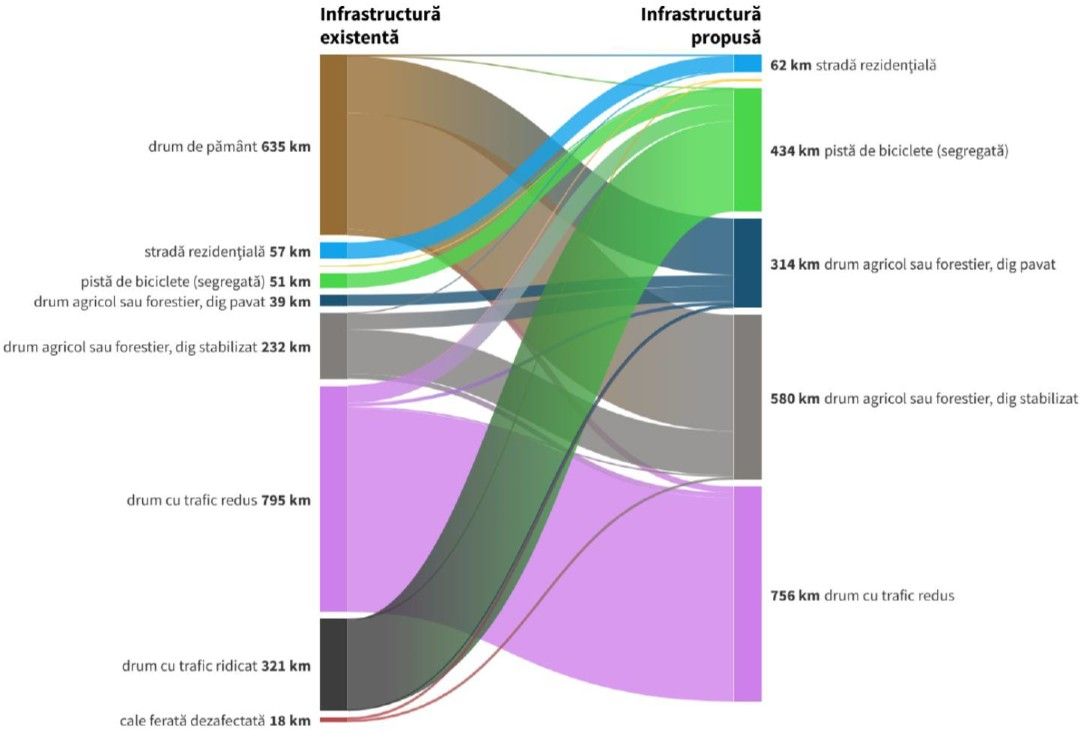
Conversion of current infrastructure to proposed interventions (source: Mobilissimus)
Focusing on EuroVelo certification (ECS)
A critical component of our technical support centred on preparing the 379.23 km of routes that overlap with the prestigious EuroVelo 6 (Atlantic-Black Sea) and EuroVelo 13 (Iron Curtain Trail) routes for future certification. Compliance with the European Certification Standard (ECS) of the ECF is a strict requirement of the tender documentation.
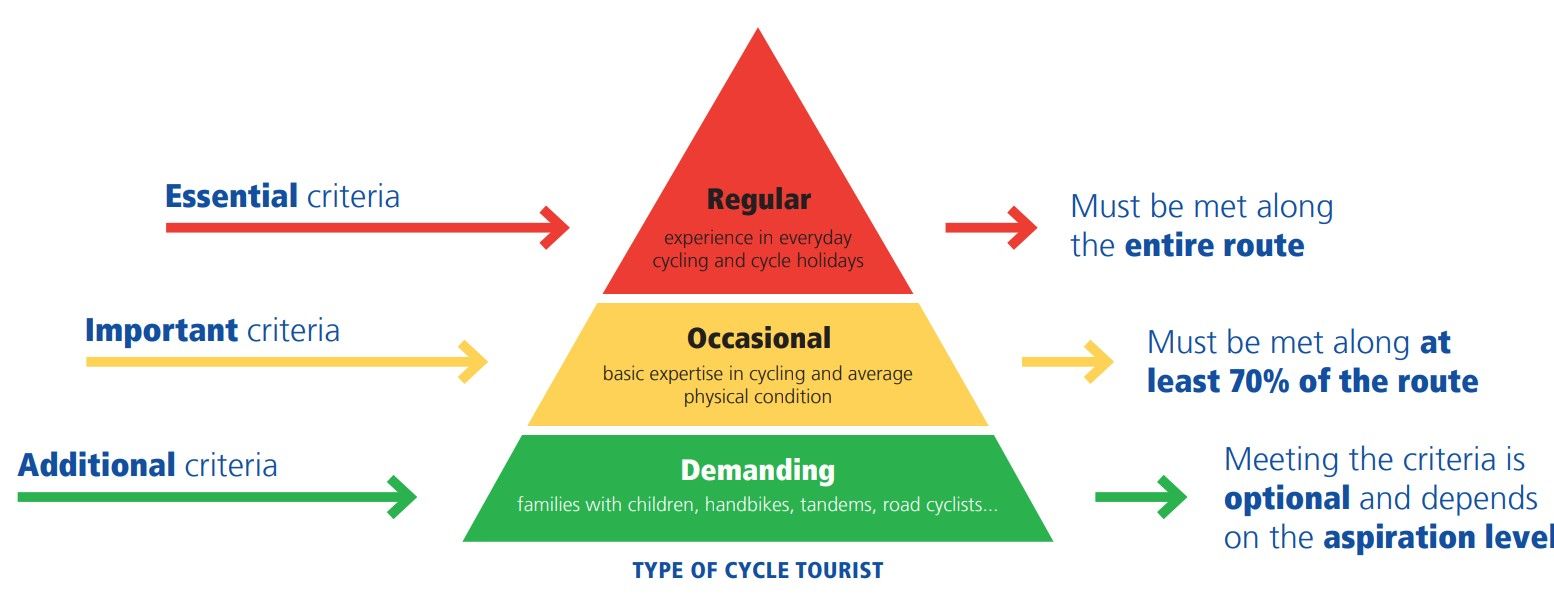
European Certification Standards extract (source: European Cyclists Federation)
We conducted a detailed baseline evaluation against ECS criteria, focusing on infrastructure aspects like continuity, surface quality, gradient, and the need for comprehensive signage. Our analysis confirmed that implementing the proposed infrastructure improvements would allow all assessed EuroVelo sections to meet the essential and important ECS criteria related to traffic exposure. Furthermore, we emphasised the necessity of ensuring continuity by eliminating physical barriers (like kerbs or steps) and legal restrictions, particularly in fragmented urban areas like Timișoara.
Enhancing the cycling tourism experiences of users
To maximise the cost-benefit ratio and increase the attractiveness of the routes, Mobilissimus developed a comprehensive Guide for planning rest areas. Based on international best practices and ECS criteria, this guide outlines the need for amenity stops ideally situated every 5–10 km. These zones are categorised by complexity, ranging from small stops for quick breaks to large areas offering extensive facilities, including covered shelters, seating, self-service repair stations, water sources, and charging points for e-bikes and mobile devices.
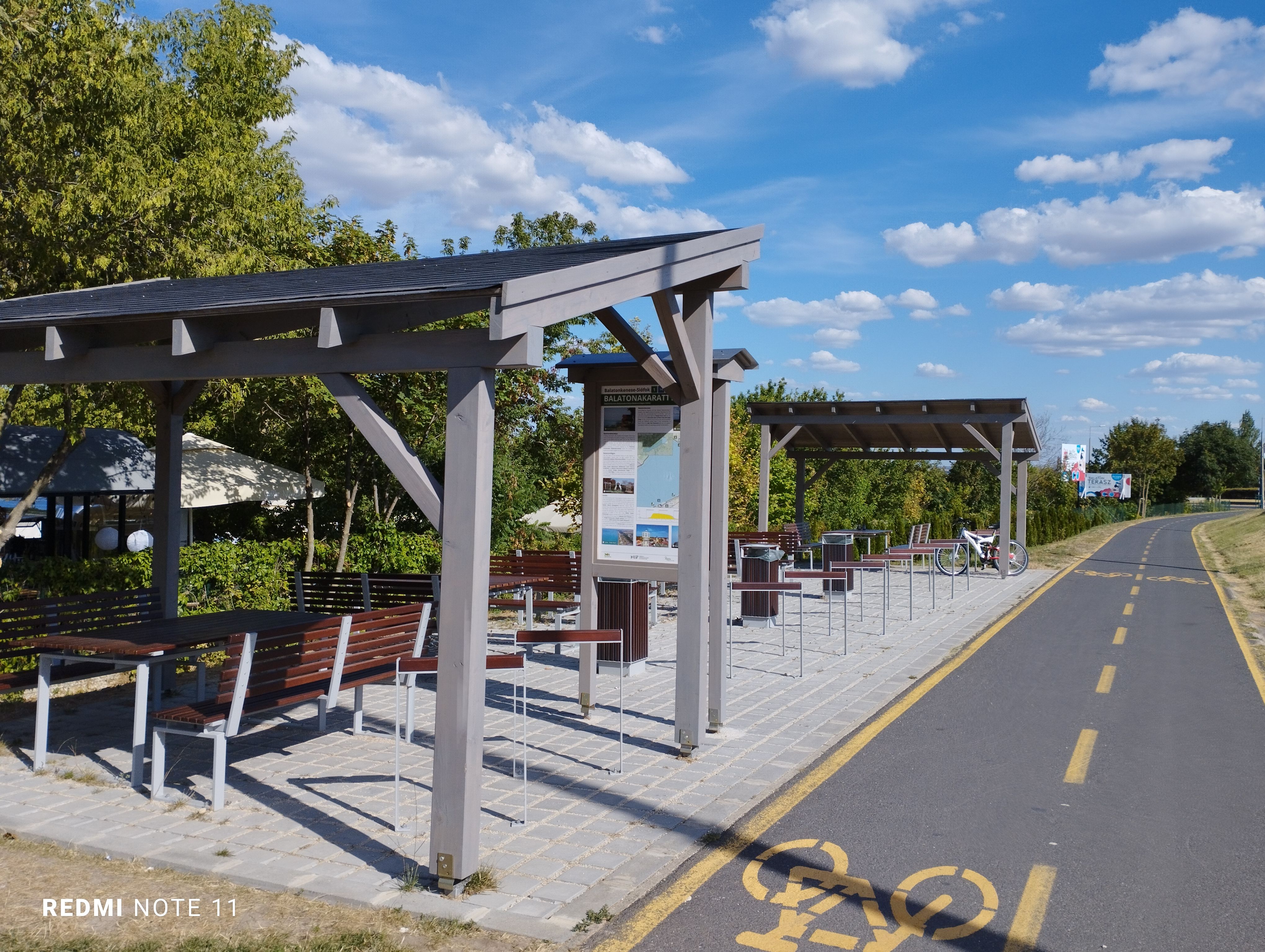
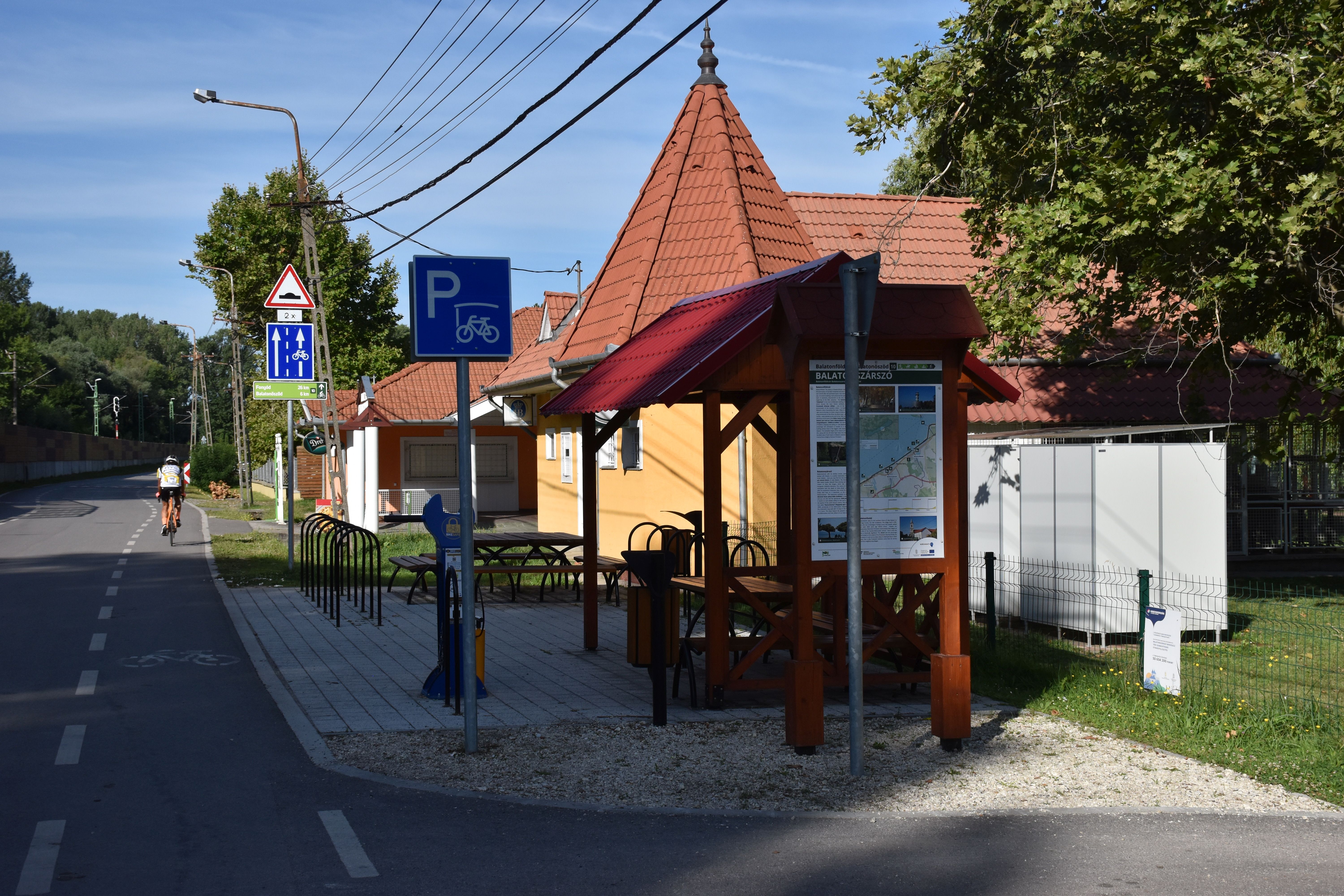
Rest areas along lake Balaton cycle route (source: Mobilissimus)
Crucially, we also detailed a concept for a bicycle traffic monitoring and counting system. This system proposes the strategic placement of automated counters—utilising technologies like inductive loops and AI cameras—across priority routes in all four counties.
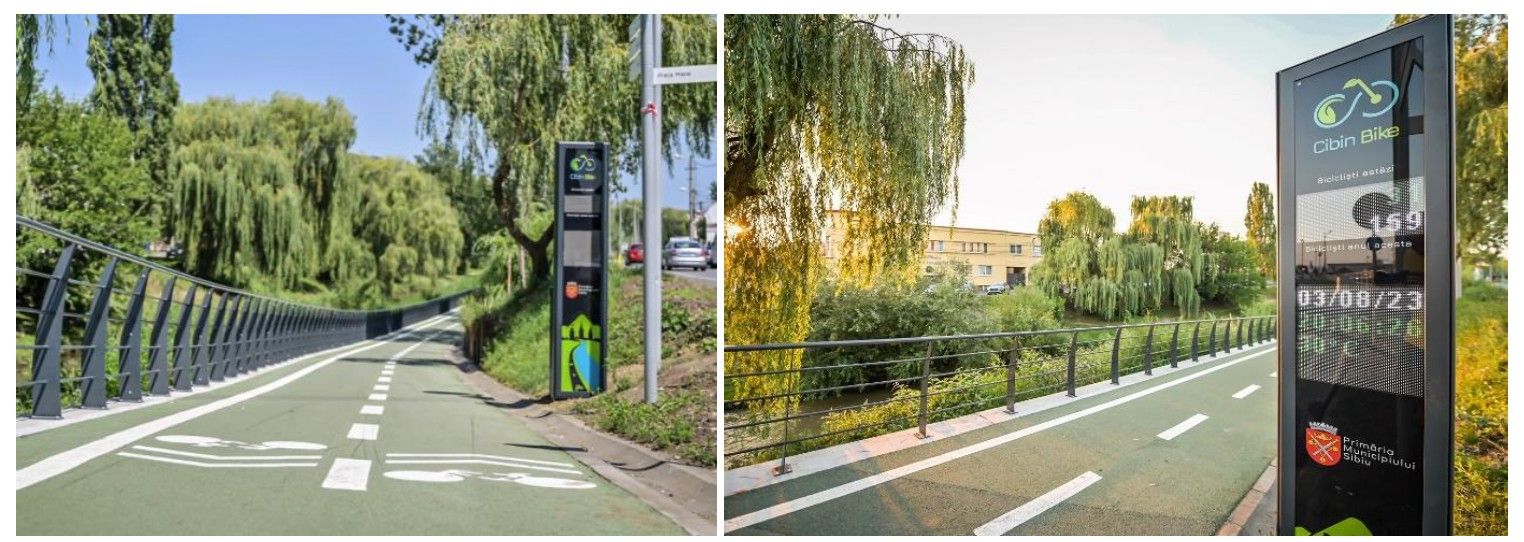
Counters for cyclists on route along Cibin river, Sibiu, RO (source: Értékterv)
The objective of this system is to collect vital data on bicycle traffic distribution, allowing authorities to measure the impact of improvements, justify future investments, plan maintenance operations, and estimate the network's positive contribution to local economy and public health.
Mobilissimus remains committed to supporting the realisation of this project, which promises to transform sustainable mobility and tourism across Western Romania.


