Mór is an important district centre in the eastern part of Fejér County, with significant regional catchment area and an industrial presence. Therefore, improving not only local but also regional connections plays a key role in the development of bicycle transportation in the town.
The current Cycling Network Plan was developed under the TOP Plusz operational programme, in accordance with the Sustainable Urban Mobility Plan (SUMP).
The Cycling Network Plan
During the status assessment, we reviewed the state of bicycle traffic, the existing network, and the missing connections in Mór and its surrounding area. The goal was to lay the groundwork for the development of a more cohesive, safer cycling network that better serves both everyday travel and leisure trips.
Existing cycling routes—such as the connections leading toward Bodajk and Csókakő—are important elements of the network; however, several regional and urban connections are still missing. A key priority is the Mór–Pusztavám connection, as well as the further development of the bike network leading toward Székesfehérvár.
The study also identified several critical points in the urban area. There is no pedestrian or bicycle connection at the Deák Ferenc Street overpass over Route 81, and the further development of the pedestrian and bicycle path along Nemes Street–Ipar Street leading to the industrial areas is also an important task. Overall, the network is still quite incomplete, with numerous connections still missing.
In addition to developing the network, conditions for the secure parking of bicycles can also be improved. New bicycle racks need to be installed at the train station, while a well-organized Bike & Ride facility is already in operation at the bus station.
Cycling route
Development Priorities
The plan outlines short-, medium-, and long-term initiatives.
- In the short term, priority will be given to making the intersection of Route 81 and Deák Ferenc Street bicycle-friendly, constructing the Mór–Pusztavám bicycle path, and developing key regional connections. In addition, there may be opportunities to open certain one-way streets to two-way bicycle traffic.
- In the medium term, the main tasks will be improving bicycle access to industrial areas, developing the route along Nemes Street and Ipar Street, and establishing connections along the Deák Ferenc Street–Velegi Road axis and to surrounding communities.
- In the long term, the goals include redesigning downtown main thoroughfares with cyclists in mind, making roundabouts safer, and developing additional regional bicycle connections leading toward Székesfehérvár.
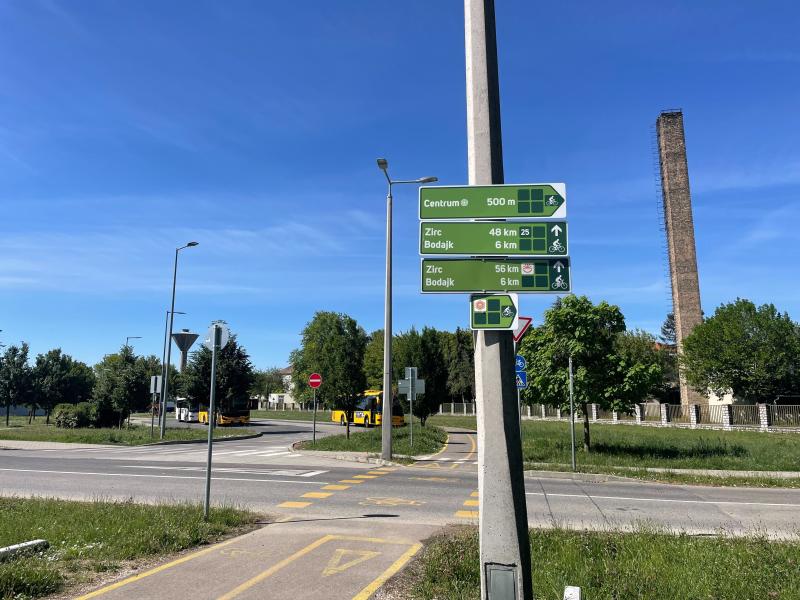
Network improvements are complemented by measures to encourage cycling: the installation of new bike racks and bike-to-work facilities, the deployment of automated bike counters, standardized signage, and awareness-raising programs in schools and workplaces.
The Cycling Network Plan provides Mór with a development framework that supports not only everyday cycling but also improvements to the conditions for regional, recreational, and wine tourism cycling.
Client:
City of Mór
Year of fulfilment:
2026